
Kitchen panelling with restraint
Wood wall or panel elements can add warmth to a kitchen, but only when used with control and linked carefully to the floor.
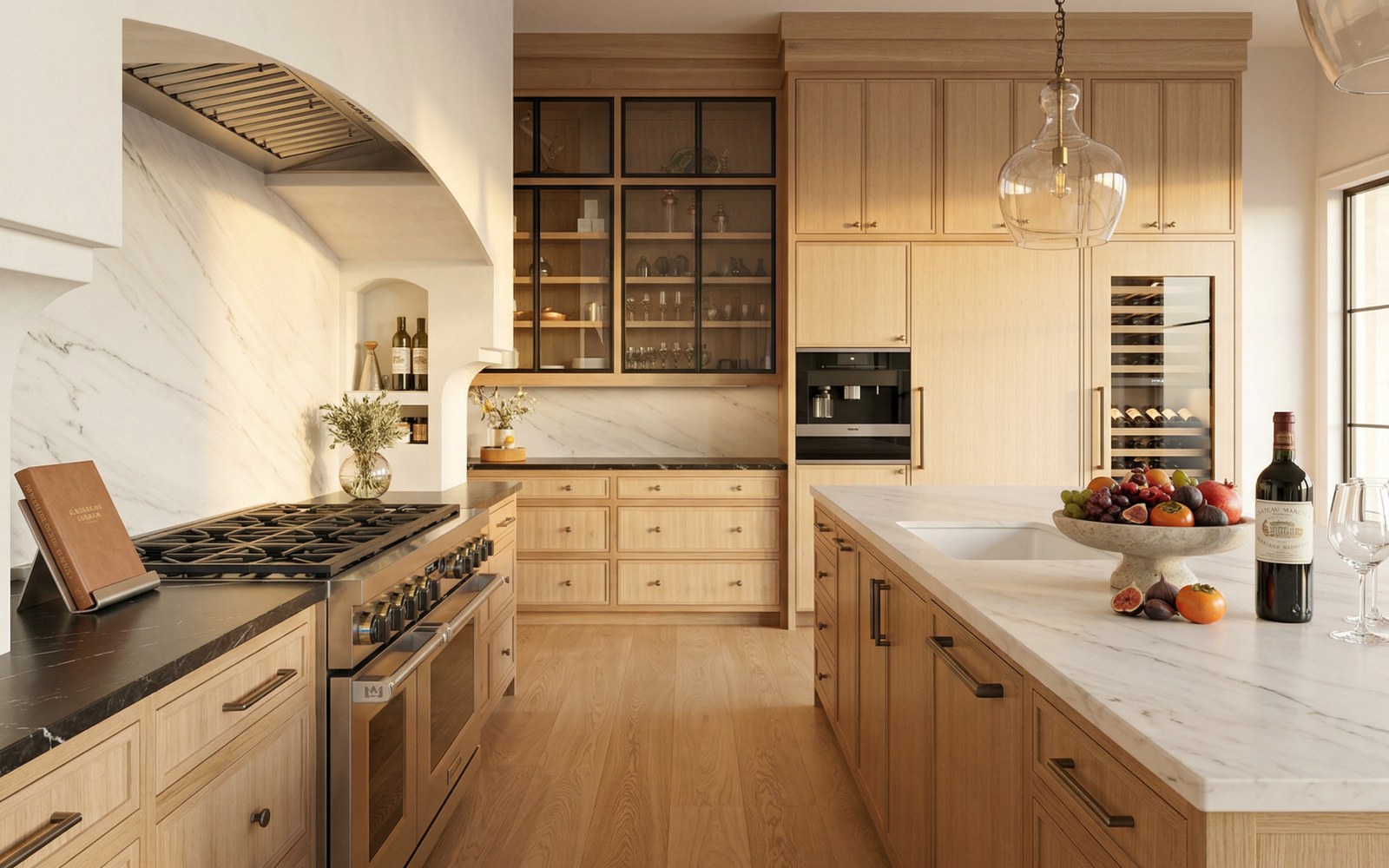
Kitchen panelling with restraint
Use panelling to support warmth and vertical rhythm, not to compete with cabinetry, splashback surfaces, or the floor itself.
- Review samples in the real room before approval.
- Match the floor with light, room use, and maintenance expectations.
- Ask for professional guidance where finish, pattern, or transitions are critical.
Related product paths
Use the links below to move directly from guidance into product selection or project support.
Where it works best
Panelling works best on selected vertical surfaces such as a breakfast niche, dining return, or a background wall that needs more warmth.
Coordinate with the floor
The panelling tone does not need to be identical to the floor, but it should feel related. Near-matches create calm continuity; controlled contrast can work when stone, paint, and textiles are doing enough to separate the layers.
Use restraint
Too much wood in cabinetry, floor, and walls can make a kitchen feel heavy. Balance the wood with matte painted surfaces, stone, plaster, or lighter vertical planes.
Keep maintenance realistic
Avoid placing decorative wood surfaces in the most aggressive splash zones or directly where steam and grease will collect most heavily.
Need project support?
Request samples, ask for a quotation, or speak with our team about product fit, room use, and specification logic.